 1 / 8
1 / 8Book III · Notebook 1 of 11
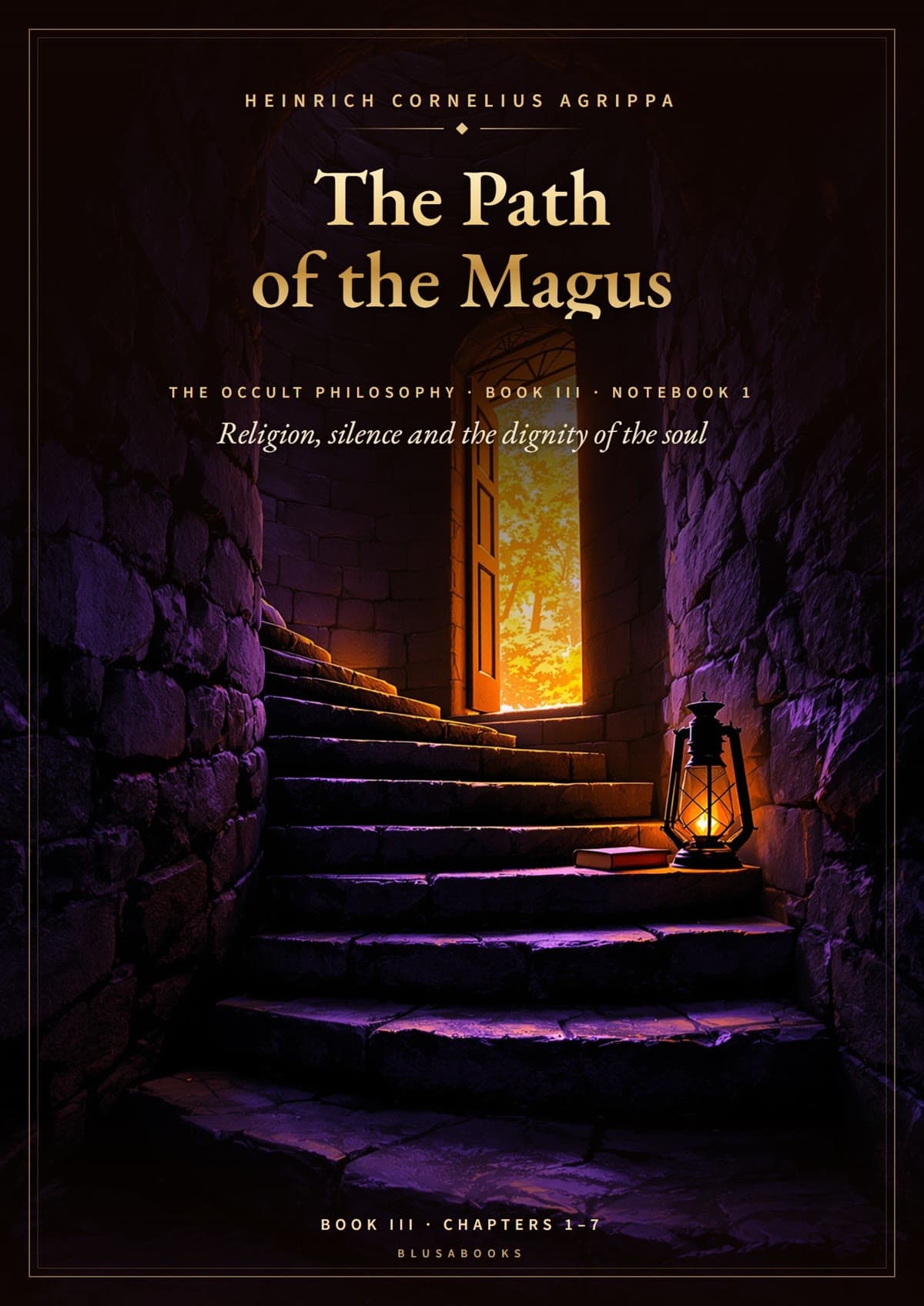
The Path of the Magus
In 1510 a young scholar from Cologne sent the famous abbot Trithemius a manuscript on the hidden powers of nature. Printed in full in 1533, Heinrich Cornelius Agrippa's "Three Books of Occult Philosophy" became the encyclopaedia of Renaissance magic — read by alchemists, doctors and astrologers, condemned by inquisitors, and copied by every occultist who came after.
€8.49PDF e-book · no VAT added
- 59 pages, illustrated PDF — reads well on phone, tablet and computer
- Instant download after payment, links also sent by e-mail
- Secure checkout with Stripe — card, Apple Pay, Google Pay
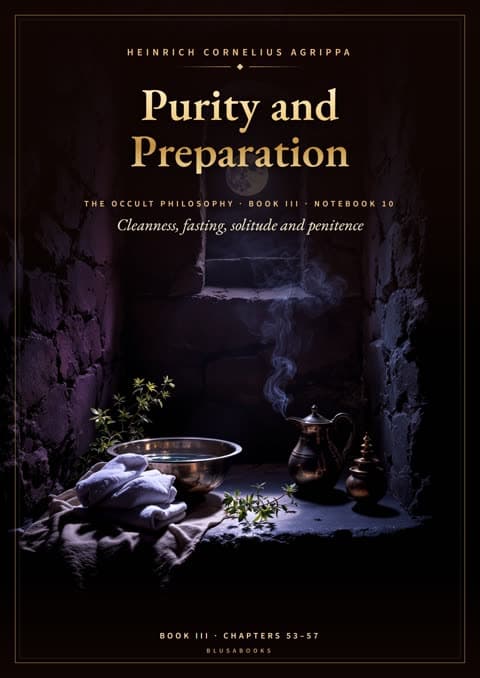
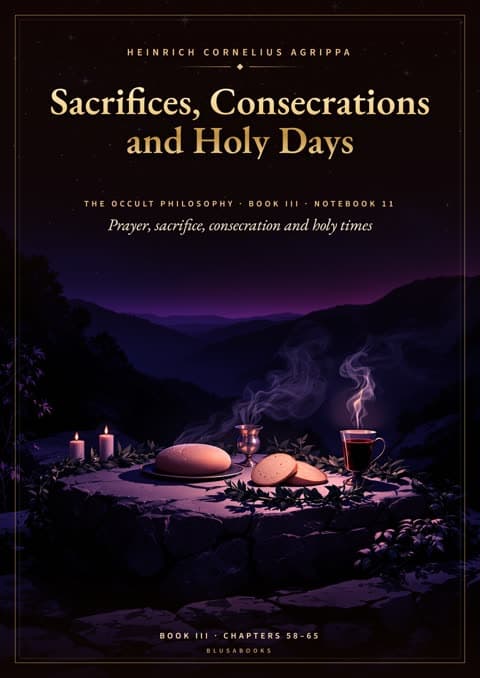
Part of The Occult Philosophy — Book III Complete
All 11 for €69.00 — save 26%
About this book
In the first two books Agrippa spoke of nature and of the heavens: of the elements, stones and plants, of the stars, numbers and images. The third book is about what stands above both — God, the angels, the soul and religion. Agrippa calls it ceremonial magic. His first question is not "how is it done" but "what kind of person must one be" to be allowed to attempt any of it at all. This is notebook 1 of 11 of Book III, "Of Ceremonial Magic", in a series that divides Agrippa's work by theme. It contains Agrippa's dedicatory epistle to Hermann of Wied, Archbishop of Cologne, and chapters 1–7 of Book III. In them Agrippa explains why religion is the foundation of all magic and why holy things must be kept in silence. He describes the dignity a magus needs and where religion turns into superstition. He then speaks of the three guides — love, hope and faith — by which the soul ascends, and of what the ancient magi and philosophers thought about the one God.
What is inside
- the dedication and Book III, chapters 1–7 — Agrippa's complete text, nothing shortened
- every chapter in four parts: In Agrippa's words · In plain words · Terms (with the Latin) · Historical note — where the idea comes from and what modern science says
- 8 original illustrations in an antique archival style
- 2 printable charts: "The Dignity of the Magus and the Three Guides" and "What the Ancients Said of God"
- foreword, closing words and a 50-term glossary
Who it is for
Readers of Renaissance philosophy, the history of religion, angelology, Kabbalah and the Western esoteric tradition who want the original text made readable — and honestly explained.
About the series
1 The Path of the Magus · 2 God and the Holy Names · 3 Gods, Spirits and Demons · 4 The Guardian Angel and the Language of Angels · 5 The Names of Spirits · 6 Seals of the Spirits · 7 Man, the Image of God · 8 The Soul after Death · 9 Ecstasy, Prophecy and Dreams · 10 Purity and Preparation · 11 Sacrifices, Consecrations and Holy Days. Each notebook sold separately.
A historical text, not a manual.
Reader reviews
No reviews for this book yet. Every buyer is invited to leave an honest review a week after purchase — reviews come only from verified buyers.
More from Occult Philosophy
See all →