 1 / 8
Stand-alone guide
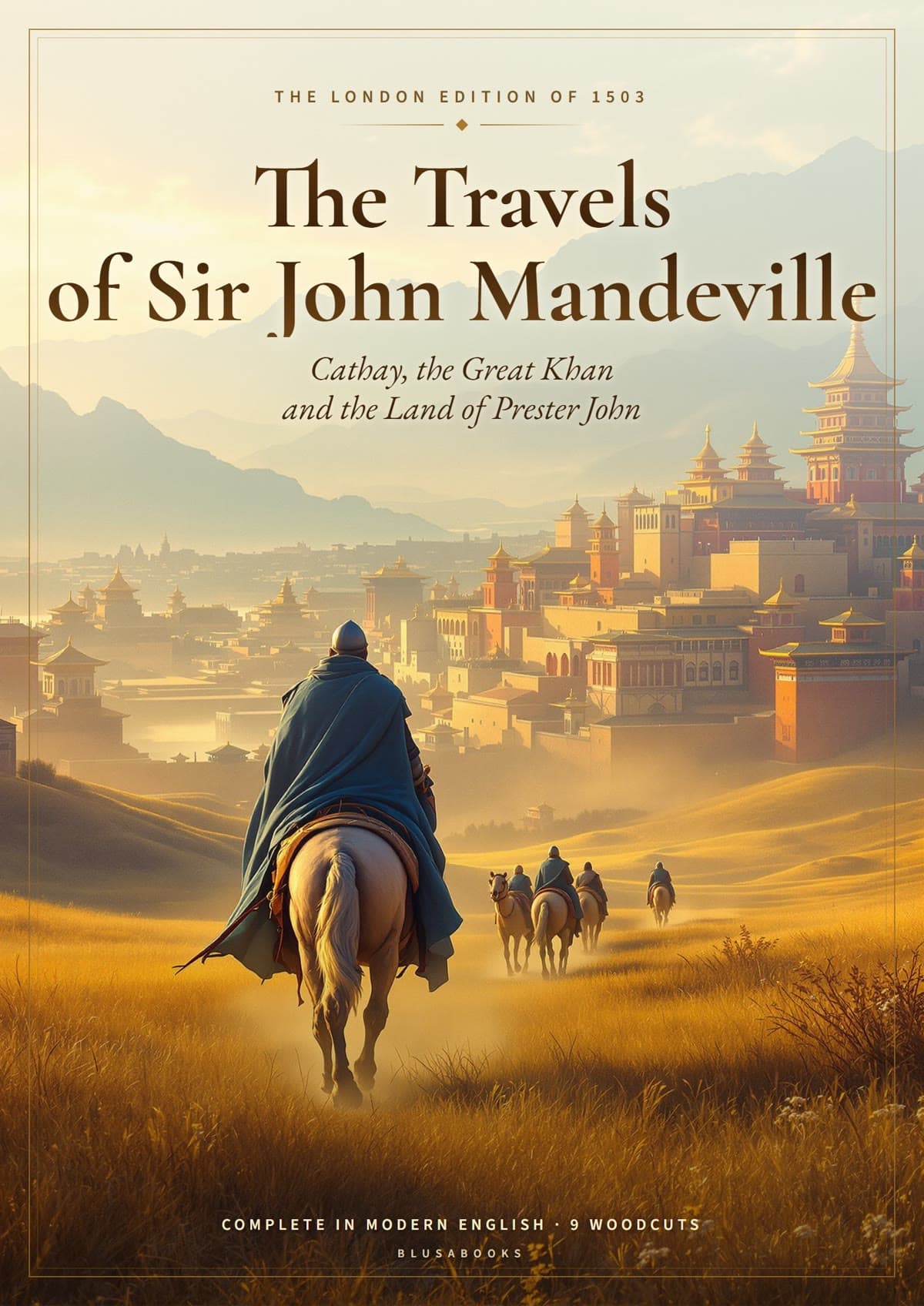
The Travels of Sir John Mandeville
The most famous travel book of the Middle Ages in modern English: Sir John Mandeville on Cathay, the court of the Mongol Great Khan, the land of Prester John and the islands of marvels at the edge of the world. From the London edition of 1503, with nine woodcuts redrawn from the original. PDF, 79 pages.
−50% €8.49 €4.24
Sale ends 9 Dec · Lowest price in the last 30 days: €8.49
PDF e-book · no VAT added · instant download
Read a free sample →- 79 pages, illustrated PDF — reads well on phone, tablet and computer
- Instant download after payment, links also sent by e-mail
- Secure checkout with Stripe — card, Apple Pay and more
About this book
"The Travels of Sir John Mandeville" appeared around 1356 and became one of the most widely read books of the Middle Ages — about three hundred manuscripts survive, and merchants, monks and kings read it; Christopher Columbus knew it too. The author called himself an English knight who had travelled the world for thirty-four years, but in truth he built his story from the best travel accounts and legends of his day. So alongside real reports of the Mongol Empire live headless men, giants, griffins and the Trees of the Sun and Moon.
This edition follows Wynkyn de Worde's London edition of 1503 (the Bodleian Library copy). Leaves 72 to 102 survive — exactly the most famous part of the book, the journey to the East.
What is inside
- ten parts with 38 original chapters: the isles of the man-eaters and Mancy (southern China); Cathay and the palace of the Great Khan; the Great Khan's court; Tartar customs, the Khan's burial and the election of a new Khan; the roads back to the West through Persia, Armenia and Georgia; Bactria and the griffins; the land of Prester John; the Perilous Valley and the isles of giants; the good people and King Alexander; the Trees of the Sun and Moon and Taprobane
- the complete text, to be read straight through, with 168 footnotes — every strange name explained on the page where it first appears
- nine woodcuts from the 1503 edition, redrawn from the original lines
- ten colour illustrations in the manner of 15th-century manuscript miniatures, one opening each part (created with AI tools)
- a Commentary section at the end: each part in plain words and what history tells us (Marco Polo, Odoric of Pordenone, the Mongol Empire)
- foreword
Who it is for
Readers of travel literature and medieval history; anyone curious about how Europe imagined China, the Mongols and the East before the age of discovery; lovers of medieval monsters and woodcuts; students of Marco Polo's world.
Reader reviews
No reviews for this book yet. Every buyer is invited to leave an honest review a week after purchase — reviews come only from verified buyers.