 1 / 8
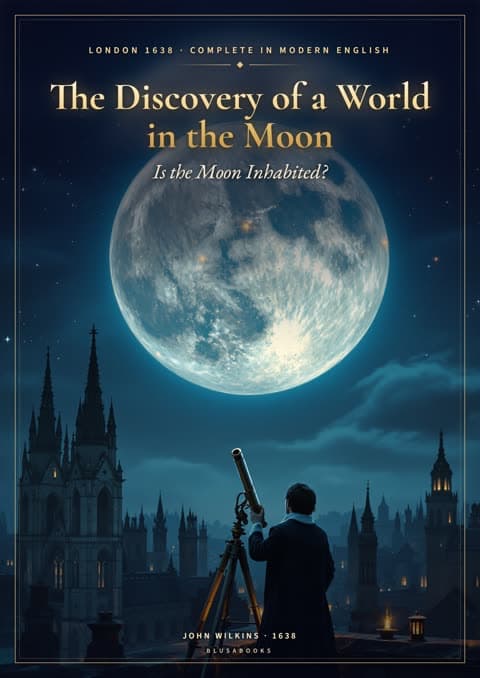
The Discovery of a World in the Moon: Is the Moon Inhabited?
Is the Moon inhabited? In 1638, only a generation after Galileo first turned a telescope on the sky, a 24-year-old Oxford scholar set out to prove, in thirteen careful steps, that the Moon may be a world like ours — with mountains, deep valleys and wide plains, seas and dry land, air and weather, and perhaps inhabitants of its own. John Wilkins' The Discovery of a World in the Moon (London, 1638) — complete, in modern English, with the original engraved title page and Wilkins' own diagrams. PDF, 124 pages.
−20% €8.49 €6.79
Sale ends 30 Nov · Lowest price in the last 30 days: €4.24
PDF e-book · no VAT added · instant download
Read a free sample →- 124 pages, illustrated PDF — reads well on phone, tablet and computer
- Instant download after payment, links also sent by e-mail
- Secure checkout with Stripe — card, Apple Pay and more




Part of Voyages to the Moon — Set of 5 Books
All 5 for €19.99 €24.99 — save 41%
About this book
Wilkins answers the objections of his day: why a new world is not absurd, why the heavens can change, why the Moon is solid and dark and shines only by the Sun, what its spots and bright parts really are, how to measure the height of a lunar mountain, and why, as their world is our Moon, so our world is their Moon. In the last proposition he asks: who might live there?
Published without the author's name, this is one of the first English books of popular science. Wilkins later became a founder of the Royal Society and Bishop of Chester. The same year saw Francis Godwin's The Man in the Moone — the story beside Wilkins' science.
Rendered into modern English by BlusaBooks with the help of AI tools, working from images of the pages of the first edition, London 1638 (thirteen propositions), originally titled The Discovery of a World in the Moone. Sentence by sentence, not a summary or a retelling. Wilkins' own margin references are kept as footnotes.
What is inside
- the address To the Reader and all thirteen propositions, with the closing list of the propositions proved
- the engraved title page of 1638 (the Copernican system, the Earth and the Moon "lighting each other") and six of Wilkins' own diagrams
- eight colour illustrations, from the Earth seen from the Moon to the imagined Selenites (created with AI tools)
- 364 footnotes on the same page: about 190 are Wilkins' own margin references, the rest explain people, places and ideas, and where today's science differs
- a preface: Wilkins at 24, Galileo and Kepler, the 1640 edition with its fourteenth proposition about a journey to the Moon, the book's influence
- Commentary at the end: each proposition in plain words and what modern science says — Galileo's mountains, the basalt "seas", the missing atmosphere, earthshine, Apollo and 382 kg of Moon rock, water ice at the poles, Artemis
Who it is for
Anyone who has looked at the Moon and wondered; readers curious about the history of astronomy and early ideas of life on other worlds; a thoughtful gift for a stargazer.
A historical source: Wilkins writes as a man of the seventeenth century, with the knowledge, beliefs and arguments of his time, kept as in the original. The notes and commentary explain what we know today.
Reader reviews
No reviews for this book yet. Every buyer is invited to leave an honest review a week after purchase — reviews come only from verified buyers.
More from Other Worlds
See all →

Other Worlds
The Dream, or Lunar Astronomy: Kepler’s Journey to the Moon
105 pages · PDF · also in paperback
€6.79€8.49
Other Worlds
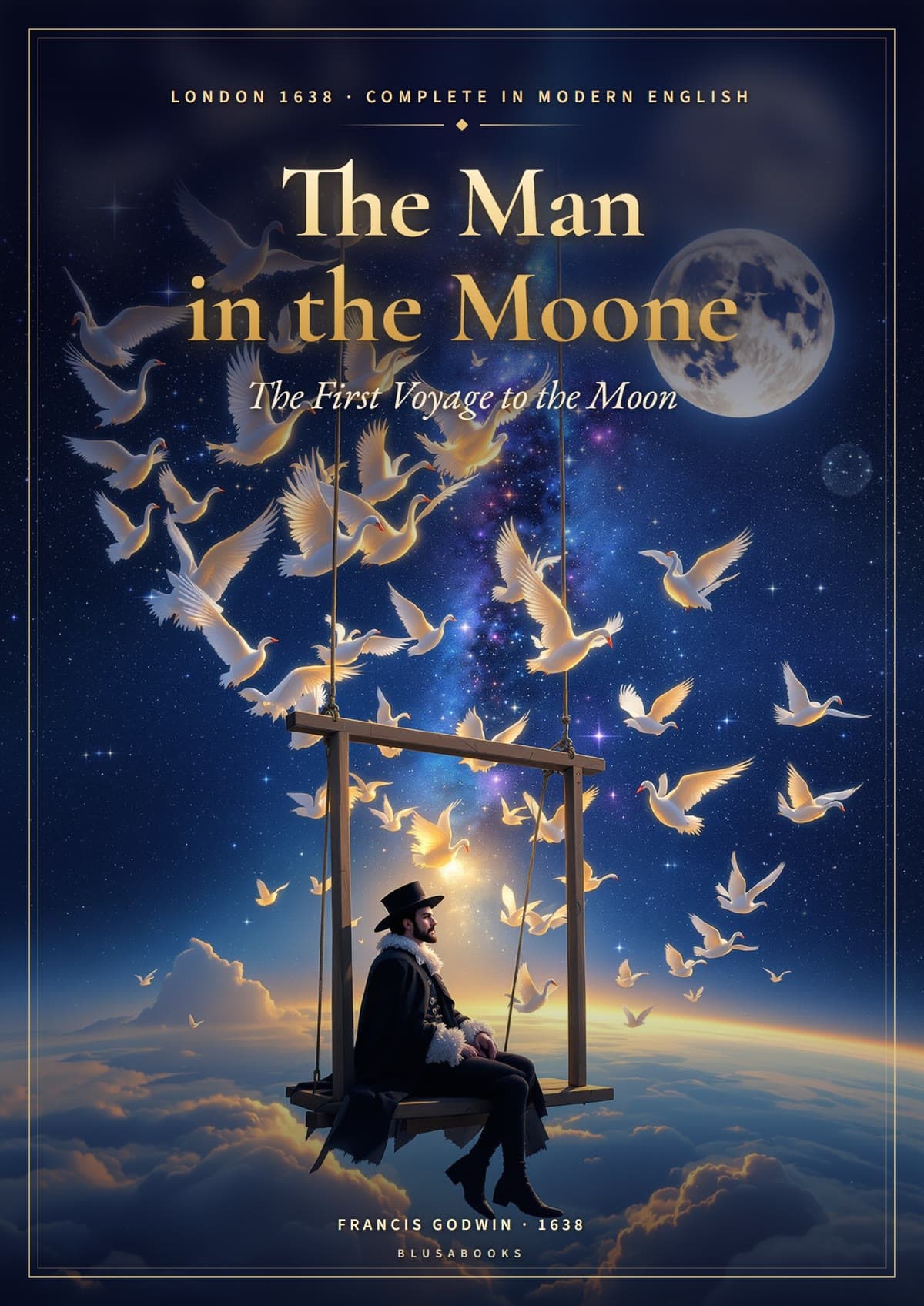
The Man in the Moone: The First Voyage to the Moon
75 pages · PDF · also in paperback
€6.79€8.49

Other Worlds
The World in the Moon: Cyrano de Bergerac’s Comical Voyage
108 pages · PDF · also in paperback
€6.79€8.49